Replacing a consumer unit — the process and price factors
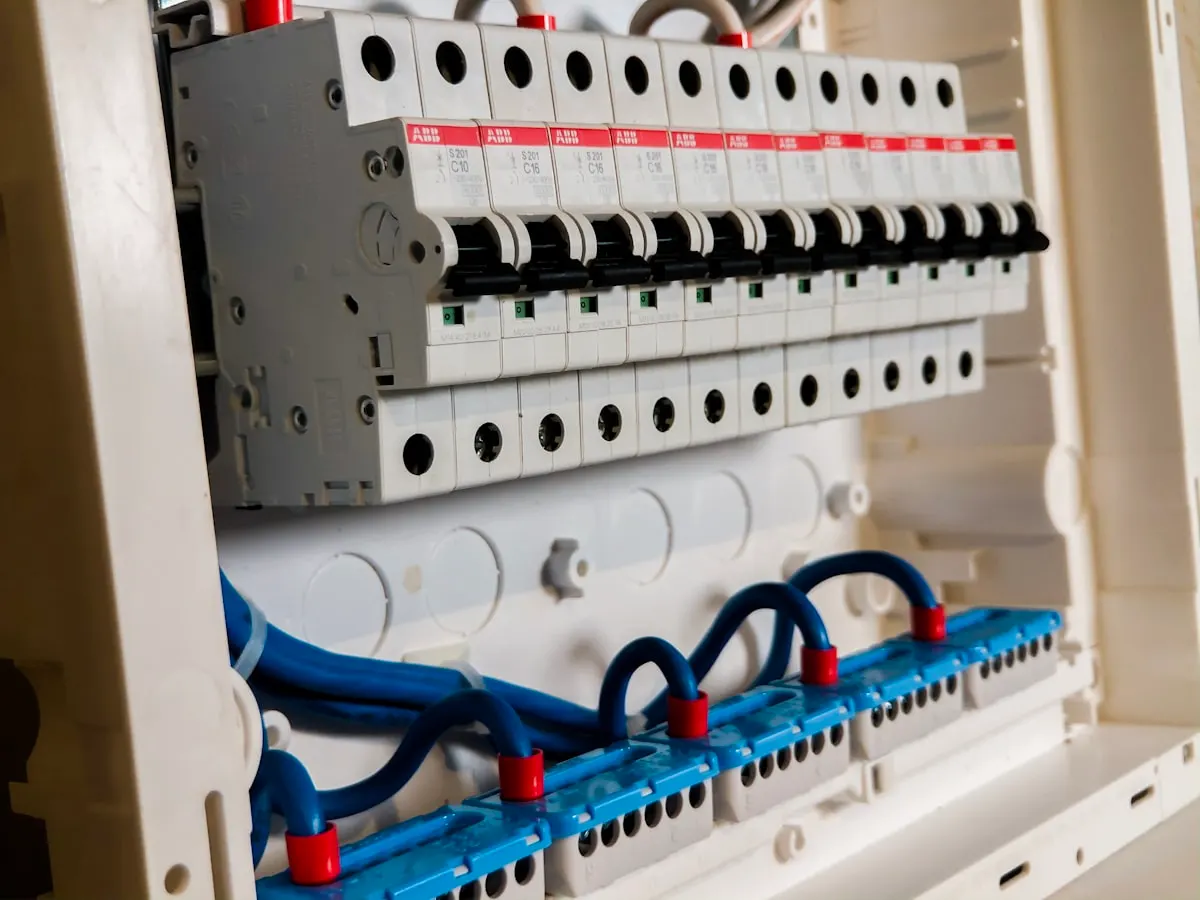
Replacing a consumer unit normally takes about a working day and may only be done by a certified electrical company. The price depends mainly on the number of circuits, the unit's location and the installation's condition. A modern unit adds circuit breakers, RCDs per group and room to grow.
Replacing a consumer unit is a job for a certified electrical installation company — it is fixed installation work and, under Swedish electrical safety rules, may not be carried out by private individuals. Expect the power to be off for most of the working day, and expect the price to be driven mainly by the number of circuits, where the unit sits and the condition of the existing installation. As a private homeowner you can normally use the ROT tax deduction of 30% on the labour cost.
Signs the consumer unit needs replacing
A consumer unit lasts a long time, but not forever — and what we ask of it has grown with our homes. These are the most common reasons for replacing or upgrading one.
- You have an older fuse box with screw-in ceramic fuses instead of circuit breakers. Not forbidden in itself, but it lacks today's level of protection and limits what the installation can handle.
- There is no RCD at all, or it protects only a few circuits such as the bathroom.
- The unit gets warm, smells odd or shows discolouration — switch off what you can and contact an electrician. If you smell burning or see smoke: call 112.
- Fuses trip frequently under normal use — a sign the installation is undersized for today's needs.
- You are planning an EV charger, heat pump, sauna or a major renovation and need more circuits than the unit can hold.
- The unit buzzes, clicks or has loose connections, or the circuit list is so poor that nobody knows what the fuses feed any more.
What a modern consumer unit contains
A new unit is about more than new fuses — it raises the protection level of the whole installation and makes future work simpler and cheaper.
- Miniature circuit breakers that reset with a flick when they trip — no spare fuses to keep in a drawer.
- RCDs, often several or one per circuit group, so a fault in one part of the home doesn't black out the whole house.
- Surge protection that absorbs transients from lightning and protects sensitive electronics.
- A clear, up-to-date circuit list so you and any future electrician can see exactly what every breaker feeds.
- Spare capacity for future circuits — EV charging, solar panels, an extension or a pool.
The replacement, step by step
A well-planned replacement follows a clear sequence, from first contact to a tested and documented installation. This is how we work.
- Inspection and quote. The electrician reviews the existing unit, counts the circuits and assesses the installation's condition. You get a price before any work starts.
- Planning. The circuits are documented and any changes — extra circuits, a new location, preparation for an EV charger — are agreed in advance.
- The power goes off. Expect the home to be without electricity for most of the working day. Plan for the fridge and freezer by keeping their doors shut — they hold the cold for hours.
- The old unit is dismantled and every conductor is labelled.
- The new unit is mounted, the circuits are connected, breakers and RCDs are fitted and everything is marked up.
- Testing and measurement. The RCDs are tested, insulation resistance is measured and every circuit is verified one by one.
- Documentation. You receive an updated circuit list and records of the work — valuable for sales, insurance matters and future projects.
What drives the price
The price of a consumer unit replacement varies more than most people expect — two seemingly identical houses can land differently. The difference almost always comes down to one of these factors.
- The number of circuits. More circuits mean more breakers, more connections and more hours of work.
- Location and access. A unit in a cramped wardrobe or basement takes longer than one that is freely accessible.
- The installation's condition. Unlabelled or ageing wiring needs more investigation before it can be safely reconnected.
- Moving the unit or extending cables adds both labour and materials.
- Options such as surge protection, extra RCDs or pre-wired circuits for EV charging and solar.
The labour cost normally qualifies for the ROT deduction of 30% if you own the home — it is applied directly on the invoice, while materials are not covered. Current conditions and caps are published by Skatteverket, the Swedish Tax Agency. Always ask for a quote where labour and materials are clearly separated, so you can see exactly what the deduction is calculated on.
The rules: why this is not a DIY job
Work inside the consumer unit is fixed electrical installation and, under Swedish electrical safety law, may only be carried out by an electrical installation company registered with Elsäkerhetsverket, the national electrical safety authority — you can verify any company's registration yourself in the authority's online register. This is not red tape: a wiring error in the unit can create lethal faults that stay invisible until the day something breaks. Work done by an unauthorised person can also cause problems with your home insurance and with the survey when the property is sold. Always hire a registered company and keep the documentation.
Smart to combine with other work
The most cost-effective moment to replace the unit is often when something else is happening anyway — a kitchen renovation, an EV charger installation or new circuits being added. You avoid paying for set-up twice, and the new unit can be sized for your real needs from day one instead of being rebuilt in a few years. Mention your plans when requesting a quote, so the unit can be prepared for the next step from the start.
Wondering whether your unit is up to standard? El Jour 24 (ASM EL & Construction AB) is based in Jakobsberg and works across Stockholm. We are certified, carry liability insurance and answer around the clock on 073-173 87 37 — we take your case at any hour, and you always get the price before work begins.