Electrical inspection when buying a home — what and why?
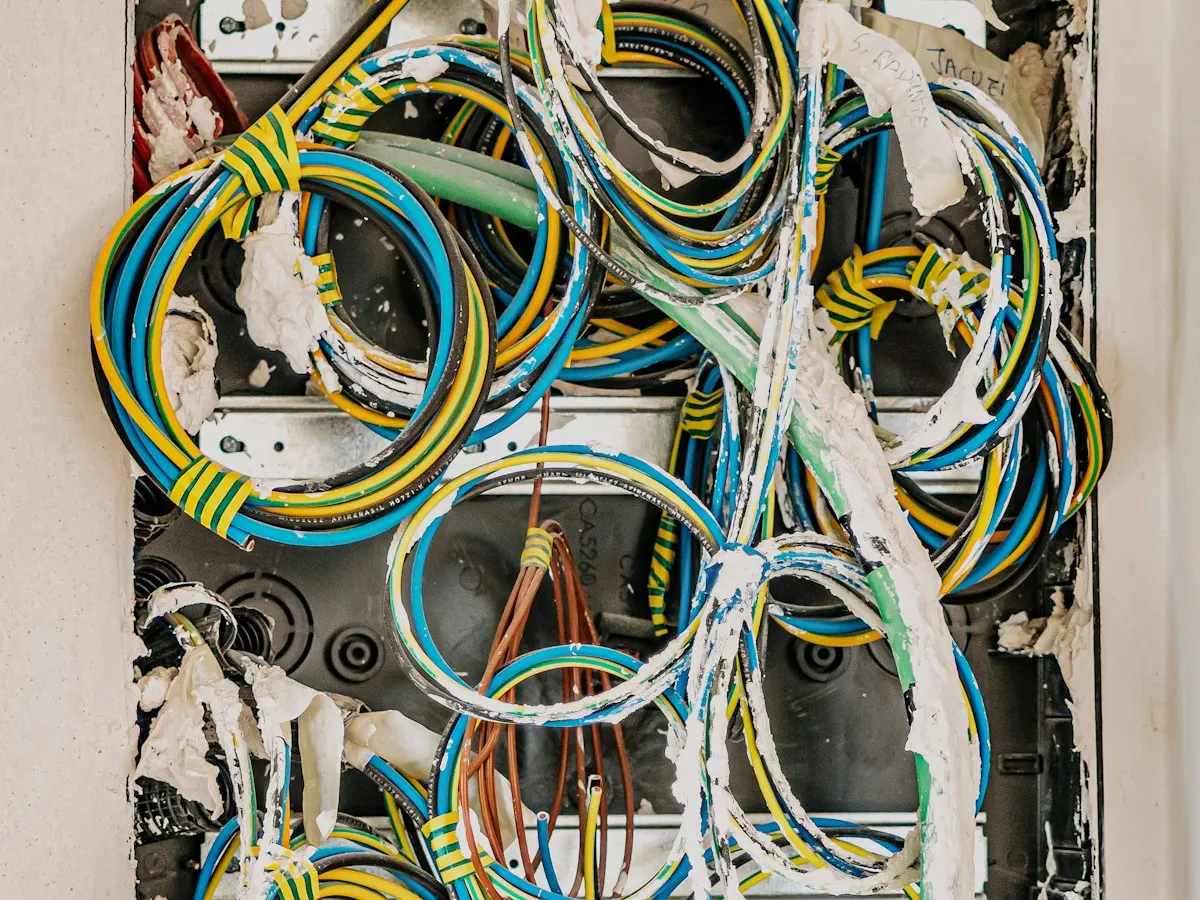
An electrical inspection when buying a home is a review of the property's electrical installation — consumer unit, RCD, sockets and visible wiring — by a certified electrician. You need one because the standard building survey rarely covers the electrics, and electrical defects are hard to spot yourself.
The short answer
A pre-purchase electrical inspection is a documented review of the home's entire electrical installation — consumer unit, residual-current device (RCD), sockets, switches and visible wiring — carried out by a certified electrician. You need one because the standard Swedish building survey (överlåtelsebesiktning) does not normally examine the electrics, while electrical defects are rarely visible to the untrained eye and can become one of the more expensive surprises in an older house.
In this guide we go through what is actually checked, the most common findings in older homes, what the report contains, how to use it in negotiation, and at which point in the buying process an inspection does the most good.
Why the standard building survey isn't enough for the electrics
A transfer survey is essentially a structural examination. The surveyor assesses the roof, facade, foundation, damp and ventilation — but the electrical installation is normally outside the assignment, beyond a quick visual note at most. The terms and conditions often state explicitly that electrics, plumbing and other technical systems are excluded.
At the same time, as a buyer in Sweden you carry a far-reaching duty to investigate the property. Defects that a professional could have discovered during a careful examination are difficult to claim against the seller afterwards. A separate electrical inspection is therefore not a luxury — it is how you fulfil that duty for the part of the house that carries current.
What an electrical inspection covers
A pre-purchase electrical inspection follows a systematic checklist, working from the consumer unit outwards. This is what gets examined:
- The consumer unit — condition, circuit labelling, and signs of heat, loose connections or ageing components
- RCD protection — whether one exists, which parts of the installation it protects, and that it actually trips when tested
- Sockets and switches — spot checks of function, earthing and mechanical condition
- Visible installations — cables, junction boxes and connections in basements, garages, attics and outdoors
- Documentation — circuit schedules, certificates from previous electrical work, and traces of undocumented changes
The inspection is mainly visual, supplemented with function tests and basic measurements. No walls need to be opened. The result is a clear picture of the installation's condition and a list of what should be dealt with — immediately, soon or in due course.
Just as important is what an inspection cannot see: cables inside walls and floors are judged indirectly, through the condition of what is visible and through the installation's history. That is why documentation carries real weight — an installation with paperwork for past work is far easier to assess than one where nothing has been kept.
Common findings in older houses
Certain remarks come up in almost every older home. Unearthed sockets in rooms where today's rules require earthing are perhaps the most common. Next come old fuse boxes that still work but lack RCD protection and space for new circuits — a real limitation the day you want an EV charger, a heat pump or a modern kitchen.
The most serious findings are often DIY installations: joints in junction boxes without lids, cables run unprotected or fixed incorrectly, sockets fitted by a previous owner without authorisation. Faults like these are not just a cost issue — they can pose a fire risk and should be assessed by a professional before you take over responsibility for the house.
Other recurring findings include sockets and switches with cracked or aged housings, junction boxes built in behind cupboards and panelling, and bathrooms where the installation no longer meets today's requirements for placement and protection. Minor issues on their own — together they paint a useful picture of how the installation has been looked after.
The report — and how to use it in negotiation
After the inspection you receive a written report. It lists every checkpoint with its status, remarks graded by severity, photos where needed, and recommended actions. A good report clearly separates safety defects that should be fixed promptly from minor deviations that can wait until the next renovation.
In a negotiation, the report is concrete evidence rather than gut feeling. You can request a price reduction matching the remedial work, ask the seller to fix the defects before completion, or — for serious faults — reconsider the purchase if your contract allows it. A documented electrical defect with photos and a professional assessment is hard to wave away, and the discussion turns on facts instead of impressions.
When to book — before bidding or before completion?
The best moment is before you bid: then you know what you are bidding on, and the cost of remedial work is baked into your offer from the start. In a fast bidding process there is not always time. The next best option is an inspection clause in the purchase contract that explicitly covers the electrics, so the inspection can take place between contract and completion with the right to renegotiate or withdraw.
Agree the wording with the estate agent or a lawyer so the clause genuinely gives you room to act. Then book the inspection as early as possible within that window — that leaves time to collect quotes for any remedial work before completion, instead of making big decisions under time pressure.
Does this apply to flats and rentals too?
Yes, with different emphasis. In a Swedish housing cooperative (bostadsrätt) you are normally responsible for the electrics inside the flat, while the association is responsible for risers and shared areas — the exact boundary is set out in the association's statutes. An electrical inspection of the flat is wise here too, especially in older associations where many different hands have made changes over the years.
In a rental, the electrical installation is the landlord's responsibility. If you discover defects, report them to the landlord — do not attempt repairs yourself. If you suspect acute danger, such as a burning smell from the consumer unit, call 112 where there is fire risk, then inform the landlord.
El Jour 24 carries out electrical inspections across Stockholm from our base in Jakobsberg, Järfälla. We are certified and carry liability insurance, and you always receive a clear written report to use in your purchase. Call 073-173 87 37 — we answer around the clock and books a time that fits your completion schedule, often at short notice. If defects then need fixing, private individuals can often use the ROT deduction of 30 % of the labour cost; current conditions are available from Skatteverket, the Swedish Tax Agency.