Your RCD keeps tripping — causes and what to do
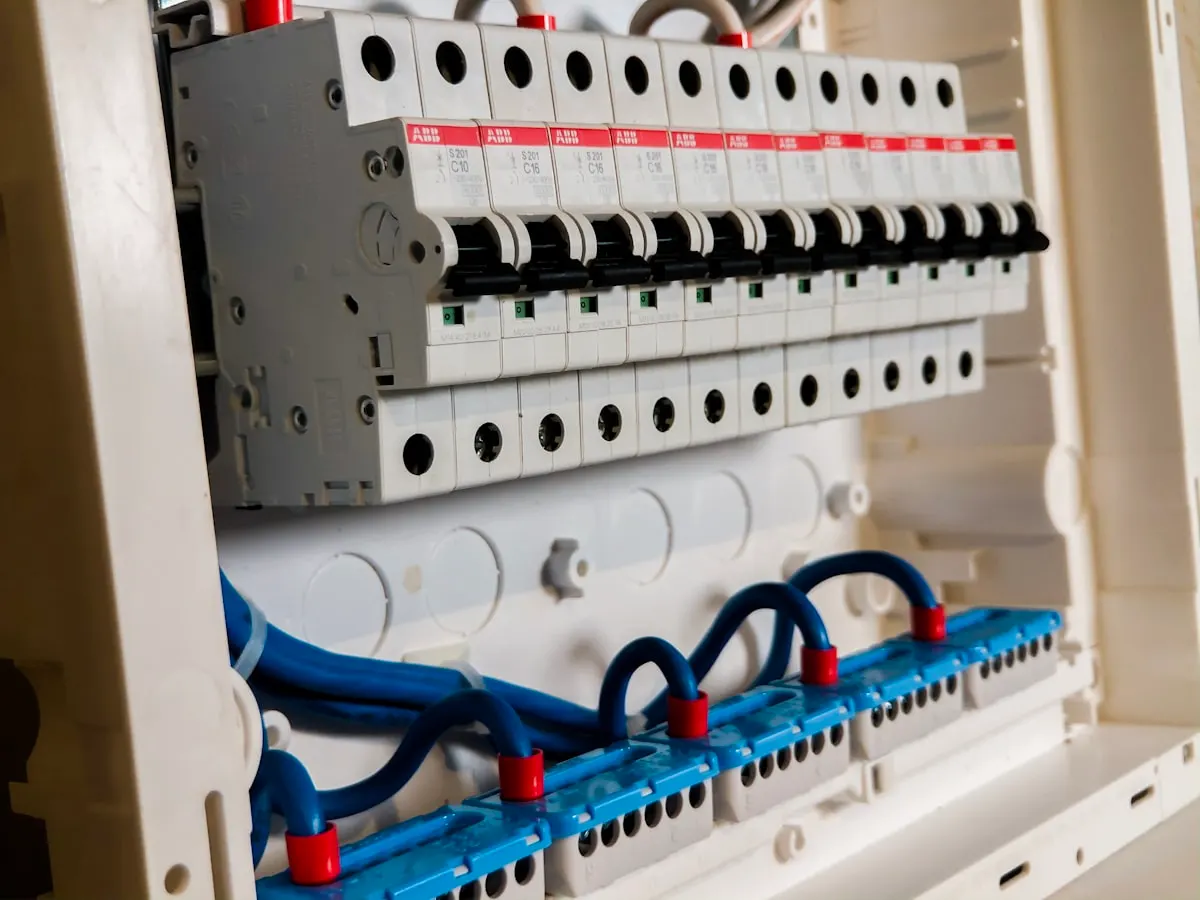
When the RCD (residual-current device) trips, it has detected leakage current — often from a faulty appliance, moisture or a fault in the installation. Switch off all circuits, reset the RCD and switch circuits back on one at a time, and in most cases you can pinpoint the fault yourself.
When your RCD trips, it has detected current leaking somewhere it shouldn't — often through a faulty appliance, moisture in a junction box or a fault in the fixed installation. It is a protection device doing its job, not a fault in itself. With one simple method — switch off all circuits, reset the RCD, then switch circuits back on one at a time — you can usually identify the circuit, and often the appliance, causing the trip.
What does an RCD actually do?
The RCD constantly compares the current flowing out into your installation with the current coming back. If the two differ, current is leaking somewhere else — in the worst case through a person — and the device cuts the power in a fraction of a second. It protects against electric shock and reduces the risk of electrical fires, and it complements the fuses rather than replacing them: fuses and circuit breakers protect the wiring against overload and short circuits, while the RCD protects people and the building against leakage currents. A modern consumer unit often has several RCDs, each protecting its own group of circuits, precisely so that a single fault doesn't black out the whole home.
Common reasons why it trips
Trips almost always come down to one of a handful of root causes. The order below is also a sensible order in which to suspect them when you start troubleshooting.
- Faulty appliances. White goods, heaters, ageing chargers and outdoor lighting are behind many trips. The fault travels with the appliance — plug it into a socket on another circuit and the RCD trips anyway.
- Moisture. Rain in outdoor sockets, condensation in junction boxes or damp in bathrooms creates leakage currents that come and go with the weather. The fault disappearing once things dry out does not mean it is gone.
- Neutral faults and faults in the fixed installation. A broken or loose neutral conductor, damaged cables or ageing connections can cause trips with no clear pattern — this category always needs a certified electrician.
- Lightning and surges. Strong transients can trip the RCD without anything being broken. If it trips in every storm, the installation should still be checked.
- The sum of many small leaks. Many appliances each leak a little — together it can be enough to leave the RCD on the edge, tripping seemingly at random.
Troubleshooting step by step
Here is how to narrow down the fault safely — no tools, nothing opened, and touching nothing except switches and plugs.
- Switch off all the circuit breakers in the consumer unit.
- Reset the RCD. If it won't stay on even with every circuit off, the fault is probably in the unit itself or the fixed installation — call a certified electrician.
- Switch circuits back on one at a time, pausing briefly between each.
- When the RCD trips, you have found the faulty circuit. Switch that circuit off, reset the RCD and turn the others back on — the rest of the home now has power in the meantime.
- Unplug everything on the faulty circuit, switch it back on and reconnect the appliances one at a time until the RCD trips. That is your culprit — leave it unplugged.
- If the circuit trips even with nothing plugged in, the fault is in the fixed installation. Leave that circuit off and book a certified electrician.
The test button — a habit worth keeping
Every RCD has a test button, usually marked T or Test. Pressing it simulates an earth fault, and the device should trip immediately — if it doesn't, have it checked by a certified electrician promptly, because you can no longer trust the protection when it really matters. A simple rule of thumb is to test a couple of times a year, for example when the clocks change, plus after nearby lightning or when the house has stood empty for a while. The test takes seconds: press, confirm the power went off, reset.
When a trip is a warning sign
Most trips are undramatic. But in some situations you should not just reset and hope for the best — treat the trip as exactly the warning it is.
- The RCD trips again immediately on reset, even with all circuits switched off.
- There is a burnt smell, or heat, discolouration or soot at the consumer unit or a socket — if there is any fire risk, call 112.
- The trips come together with a tingling sensation from taps, appliances or white goods.
- There is visible moisture or water damage near the electrical installation.
Never bypass an RCD that keeps tripping, and don't leave it reset on trial if something smells or feels warm. The protection is there for a reason — let a certified electrician find the cause instead of silencing the symptom.
Older homes — protection on only some circuits
In houses built before RCDs became standard, it is common that only the bathroom or the outdoor sockets are protected — sometimes there is no RCD at all. That means large parts of the home lack personal protection against leakage currents, even if everything works day to day. Today's rules set far higher requirements for new and rebuilt installations, and Elsäkerhetsverket, the Swedish Electrical Safety Board, highlights the RCD as a key protection against both shock and fire. If you live in an older house, a review of the consumer unit is a sensible investment: the protection can often be extended, or the unit upgraded so every circuit is covered. That work normally qualifies for the ROT deduction of 30% of the labour cost — current conditions are listed by Skatteverket.
What the electrician does
A certified electrician works systematically instead of guessing: measuring insulation resistance circuit by circuit, splitting the installation until the fault is cornered, and separating appliance faults from faults in the fixed wiring. Sometimes the fix is simple — a faulty appliance is scrapped, a damp junction box is dried out and sealed. Sometimes ageing cables or a neutral fault turn up and must be repaired before the protection can be trusted again. All work on the fixed installation must, under current rules, be carried out by an electrical installation company registered with Elsäkerhetsverket. El Jour 24 troubleshoots around the clock across Stockholm and is normally on site within 2 hours for urgent faults — call 073-173 87 37 and we answer straight away, at any hour.