Fuses keep blowing — a home troubleshooting guide
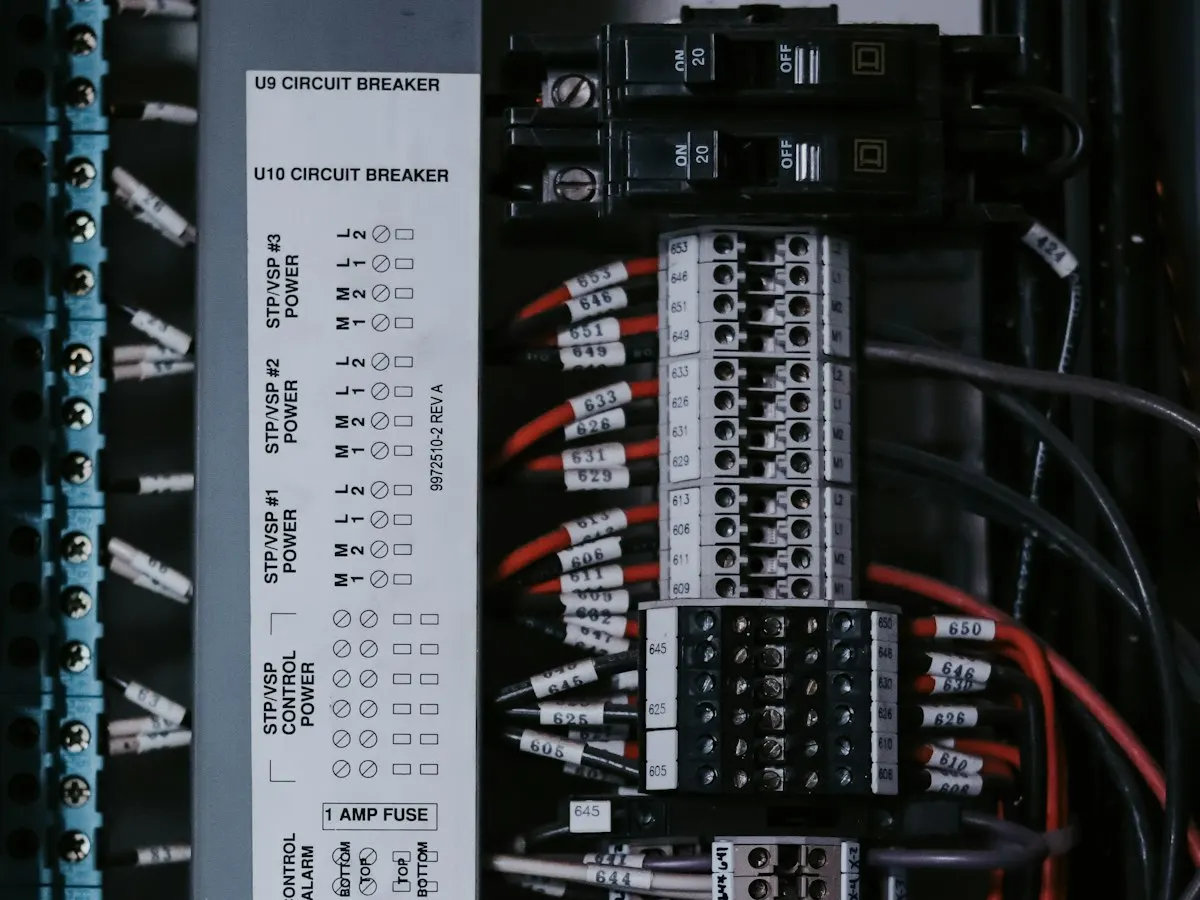
Fuses that trip frequently almost always point to an overloaded circuit, a faulty appliance or a fault in the fixed installation. The fuse is the protection — not the problem. Troubleshoot systematically: identify which device is tripping, map your circuits and narrow down the cause by elimination before calling an electrician.
The short answer
Fuses that blow often almost always mean one of three things: the circuit is overloaded, a connected appliance is faulty, or there is a fault in the fixed installation. The first you can often solve yourself by spreading the load — the other two require proper troubleshooting, and faults in the installation must always be repaired by a certified electrician.
The most important thing first: a fuse that trips is doing its job. Simply resetting it again and again — or fitting a fuse with a higher amp rating — solves nothing and can create a fire risk. Troubleshoot calmly and methodically instead.
Fuse, circuit breaker or RCD — which one is tripping?
Start by establishing which protective device is actually tripping, because they point to different kinds of fault. A classic bottle fuse melts and must be replaced with a new one of the same rating — the small coloured indicator bead shows whether it is intact. A circuit breaker is a lever that springs down and can be reset. Both react to overload and short circuits.
The residual-current device (RCD) is different: it monitors that no current is leaking the wrong way — through a damp appliance, for example, or through a person. So when the RCD trips, the issue is rarely too many appliances but an insulation fault somewhere. That distinction decides how you should troubleshoot next.
- A fuse or breaker trips the moment something is switched on — suspect a short circuit in the appliance or its cable
- It trips after a while when a lot is running at once — suspect overload on that circuit
- The RCD trips, sometimes with no clear pattern — suspect an earth fault, often linked to moisture or outdoor installations
Map your circuits — half an hour that pays for itself
Many consumer units have a circuit schedule that is incomplete or out of date. Spend half an hour mapping it: switch off one circuit at a time and note which rooms, sockets and fixed appliances lose power. Then write a new, clear list and keep it by the unit.
- Do the exercise in daylight and shut down sensitive electronics first
- Test every socket — including outdoors, in the garage and in the attic
- Note fixed installations such as the cooker, water heater and underfloor heating
- Photograph the list and keep it on your phone — useful when you talk to an electrician
The exercise gives you two things. You will find the fault faster the next time something trips, and you will see at a glance whether several power-hungry appliances happen to share one circuit — which is often the whole explanation for repeated tripping.
Typical patterns: kitchen mornings and radiator winters
Overload follows the rhythm of everyday life. The classic example is the kitchen in the morning: coffee maker, kettle, toaster and microwave on the same circuit — harmless individually, too much together. Another pattern is winter, when electric radiators and fan heaters run for hours and the load on one circuit suddenly stays high around the clock.
Power strips and extension leads make things worse. They make it easy to gather many appliances on a single wall socket, and a thin lead under heavy load can itself become warm. High-power appliances — heaters, tumble dryers, washing machines — belong directly in a fixed socket, never on a power strip.
The elimination method: closing in on the appliance
If you suspect a faulty appliance, do this: switch off the circuit that usually trips and unplug everything connected to it. Reset the fuse or the RCD. Then reconnect the appliances one at a time, a few minutes apart, until the protection trips — and you have your prime suspect.
Bear in mind that some faults are delayed: an appliance with moisture damage or a heater with ageing insulation can run for a while before the fault shows. And if the protection trips even with everything unplugged, the fault is not in the appliances but in the installation itself — that is when you call.
When the frequency itself is the warning sign
A device that trips occasionally under obvious overload is normal. But if the same fuse goes week after week with no clear cause, or the RCD trips seemingly at random, treat it as a warning of an underlying fault — a damaged cable, a loose connection or moisture in an outdoor junction box.
A certified electrician troubleshoots with measurements you cannot make yourself: insulation testing circuit by circuit, checks of load and how it is spread across phases, a review of joints and connections in the consumer unit and junction boxes, and a test that the RCD trips at the correct threshold. That is how you separate an innocent overload from a fault that must not be left alone.
If you notice a burnt smell, discoloured sockets or crackling sounds from the consumer unit, stop troubleshooting on your own. Switch off what you can, never touch exposed wiring — and where there is smoke or fire risk, always call 112 first.
Prevent it: spread the load — or upgrade
The simplest fix is smarter distribution: move the kettle to another circuit, run the washing machine and tumble dryer at different times, and avoid power strips for anything that produces heat. If that is not enough, an electrician can split heavily loaded circuits, run new circuits to the kitchen or utility room, or upgrade an older fuse box to a modern unit with circuit breakers and RCD protection.
If you live in an older house with a bottle-fuse box, a modern consumer unit with RCD protection on every circuit is a safety upgrade in its own right — and often a prerequisite for future needs such as an EV charger, a bigger kitchen or an extension.
El Jour 24 troubleshoots and repairs across Stockholm from our base in Jakobsberg. For acute faults we are normally on site within 2 hours, around the clock every day of the year. We are certified and carry liability insurance, and planned work such as circuit splitting or a consumer unit upgrade can qualify for the ROT deduction of 30 % of the labour cost for private individuals — current conditions are available from Skatteverket. Call 073-173 87 37; we answer around the clock and routes your case to the right electrician.